Waterproofing of the underground car park

The underground garage of the SPZ complex made with the waterproof structure Drytech White Tank

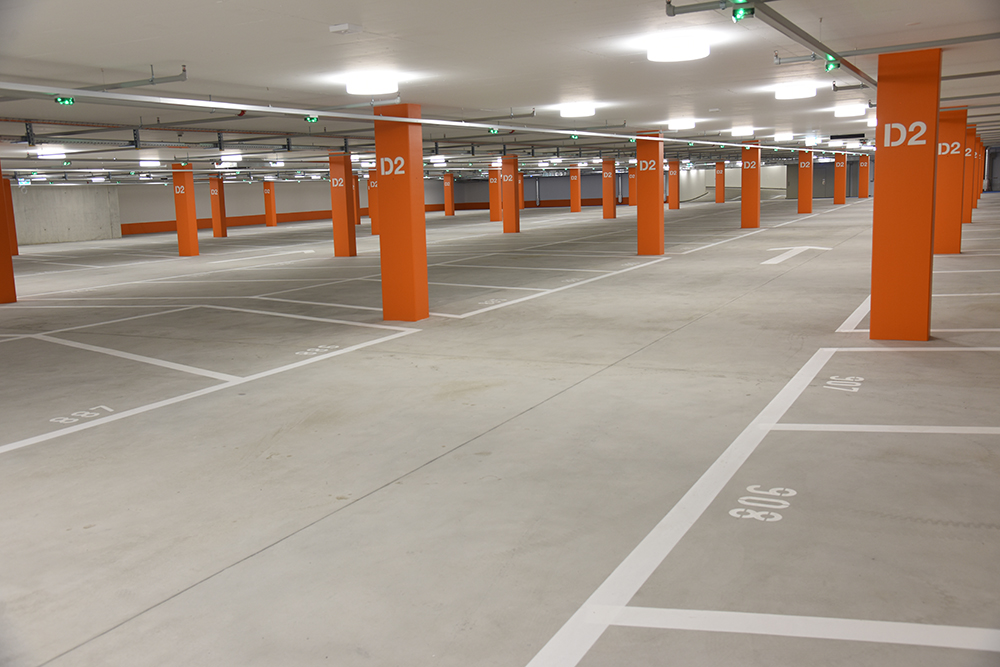
Drytech realised the waterproofing of the underground car park of the Schweizer Paraplegiker-Stiftung in Nottwil, on the banks of Lake Sempach.


Due to the presence of a significant water table, the large underground car park and all underground rooms were constructed with Drytech Tank waterproofing.

The car park of the Schweizer Paraplegiker-Stiftung shares an entrance with the underground car park of the “Sempachersee” hotel.

Car park D has 242 parking spaces on two floors, 31 of which are specially designed for wheelchair users.

As part of the construction of the new Swiss Paraplegic Centre, a practical and functional connection to the Guido A. Zäch Institute was also created.

Owner: Schweizer Paraplegiker-Stiftung, Nottwil 

Structure: Basler & Hofmann West AG, Zollikofen

Project: Hemmi Fayet Architekten AG, Zürich

Construction: Stutz AG, Willisau

Waterproofing: Drytech Tank, 4’700 m2

Waterproofing of a automotive plant

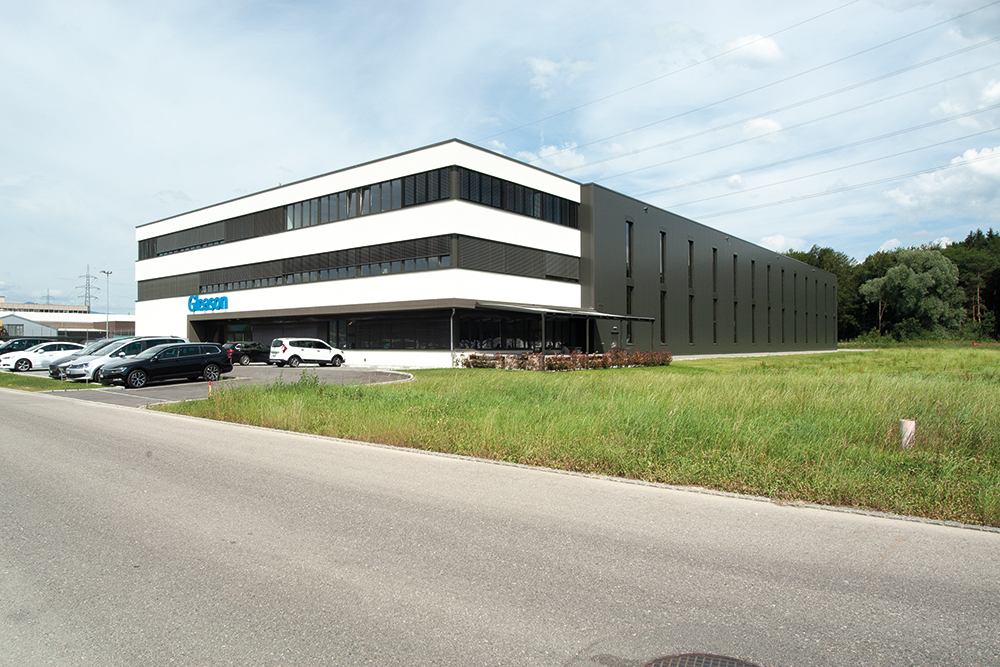
The new Gleason headquarters in Studen

The waterproofing of the basement level of a large, modern automotive plant was realised with the Drytech White Tank system.

The building is used partly for offices and partly as a large production area for the Studen branch of GLEASON-PFAUTER Maschinenfabrik GmbH.

Technologically sophisticated gear hobbing machines for the production of precision gears for the worldwide automotive industry are manufactured here.

The large volume is flooded with light and has flexible space management.

Drytech Tank waterproofing has reduced the construction time of the industrial complex.

Owner: ECOREAL Schweizerische Immobilien Anlagestiftung, Zürich

Tenant: Gleason-Pfauter Maschinenfabrik GbmH, Zweigniederlassung Studen

Contractor: Losinger Marazzi AG, Bern

Structure: CAD Zürich GmbH, Zürich

Project: Frey Architekten, Olten

Construction: Frutiger AG, Thun

Drytech Wanne: 3’324 m2

The waterproofing of the Intesa Sanpaolo skyscraper

The Intesa Sanpaolo Tower in Turin confirms the coincidence between form and substance that characterized the entire work of architect Renzo Piano.

The waterproofing of the Intesa Sanpaolo skyscraper in Turin with the Drytech Tank system has made the perimeter joint between the raft and diaphragm watertight, among other structures.

The Intesa Sanpaolo Tower in Turin confirms the coincidence between form and substance that characterized the entire work of architect Renzo Piano.

Just look at it to understand how it is made, how it works. Starting with the multiple relationships that he establishes with the environment, the city, the mountains on the horizon.

The east and west facades are characterized by tapered columns that support the 38 floors above ground, for a height of 166 meters.

A skin of mobile and transparent slats is suspended on these facades, which convey the air for cooling in summer and ensure thermal insulation in winter.

The skyscraper breathes and interacts with the environment, with the aim of consuming very little energy, which is moreover produced entirely from renewable sources.

The south side in fact entirely covered by a photovoltaic field of 1,600 square meters and the air conditioning system uses the heat exchange energy with the ground water. A rainwater collection system allows a saving of 48% of drinking water. Rain sensors and intelligent control units ensure controlled irrigation of green areas.

Lighting is also optimized through a louvered sunscreen system that modulates the amount of sunlight that penetrates the premises. At sunset the artificial lights come on automatically and gradually, according to the ephemeris.

The dialogue with the outside is not limited to the energy aspect, but also affects the social and urban plan. In addition to the offices for 2,000 Intesa Sanpaolo employees, the skyscraper has six floors dedicated to the public, with an auditorium, spaces for cultural events, a restaurant and a school. On the top of the Tower there is also the bioclimatic greenhouse and a panoramic café.

Started in December 2008, the first phase of the project ended in June 2011 with the construction of the foundations and the 6 underground floors with the top-down technique. Drytech has created all the tanks (internal and external) with the White Tank system as well as the treatment of the floor-diaphragm recovery joint along the entire perimeter of the basement, for a total linear development of 420 meters.

The underground floors house a car park with 300 parking spaces, technical rooms and the surprising underground garden, which also overlooks the kindergarten park.

At the foot of the skyscraper there is a park crossed by pedestrian paths that connect the surrounding avenues. On the large lawn, the kids give life to a theory of spontaneous and interminable football matches, making the doors with a pair of sweatshirts.

Ownership: Intesa Sanpaolo Spa, Torino

Project: Arch. Renzo Piano, RPBW Paris

Structure: FHECOR Ingenieros Consultores, Madrid

Drytech Tank: 5,200 m²

Waterproofing the underground garage

Architectural detail of the loggia of the Municipal House of Cadempino

Waterproofing the underground garage of the Cadempino town hall, designed by Antonio and Luca Antorini Architetti.

The new Municipal House of Cadempino is the seat of the city administration, but it is also many other things for the citizens. It is first of all a square, or an agora: in the Hellenic sense the main place of democracy, heart of the polis and seat of the assemblies.

This large open space, which from an architectural point of view communicates with the volumes, enhancing them through the contrast between empty and full, from an urban planning point of view acts as a catalyst and multiplier of meeting opportunities, both organized and spontaneous.

The square is also an arena: the steps that define the west side host the public for en plein air shows or events. The hope is that it will also be colonized and chosen as a wall by the kids of the town, but these are imponderable dynamics on which architecture can affect up to a certain point.

The space is delimited to the north by the large multi-purpose room and to the east by the municipal warehouse, while the main building, just set back, characterizes the square with a spectacular loggia that lightens its volume, and on which Lorenzo’s mobile sculpture vibrates Change.

The basement houses two car parks with charging stations for electric cars.

The entrance to the Municipal House of Cadempino is created in a deep setback compared to the main facade, which also in this case the void gives lightness to the structure.

The three levels of the main building develop around a tree that grows in a winter garden created in the center of the structure.

Vital fulcrum of the building, visible from each level at a different height, the cork oak takes on an engaging symbolic value, in which democracy can be seen as a good to be cultivated with everyone’s contribution.

Project: Antonio e Luca Antorini Architetti, Porza

Structure 1: Ing. Alessio Casanova, Pazzallo

Structure 2: Ing. De Bernardis, Massagno

Construction: CSC, Lugano – Giovanni Quadri, Cadempino

Sculpture: Lorenzo Cambin, Sorengo

Drytech Tank: 3’190 m2

Waterproofing Läderach chocolate factory

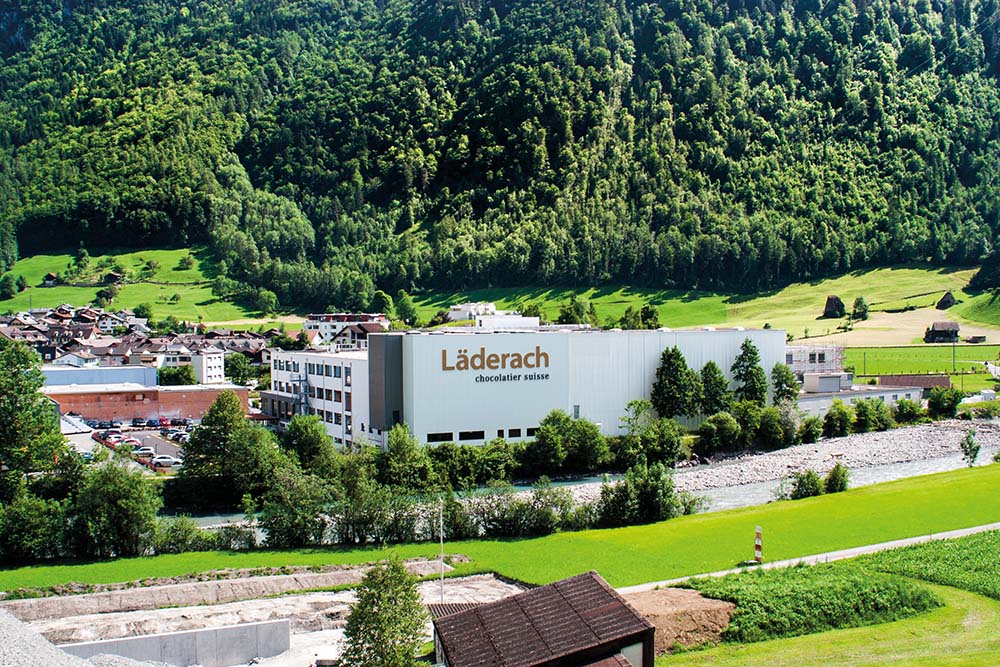
The Läderach site is bordered by a river, which is why the basement was built with the waterproof structure Drytech White Tank.

Drytech carried out the waterproofing of the new extension of the Läderach chocolate factory, which was built near a water course.

Since 1999, Läderach (Schweiz) AG, which has long since gained a worldwide reputation, has expanded almost every year by adding extensions, extensions and basements to its headquarters in Ennenda.

Leuzinger Architektur AG from Glarus designed and realised all the new buildings.

The latest is a new four-storey production hall, on the ground floor of which a new staff restaurant has opened.

Owner: Läderach (Schweiz) AG, Ennenda

Structure: Jackcontrol AG, Glarus

Project: Leuzinger Architektur AG, Glarus

Construction: Trümpi AG, Glarus

Waterproofing: Drytech Tank, 2’090 m2

Waterproofing of Tissot Arena

Vista aerea della Tissot Arena di Bienne, con lo stadio di calcio, la pista di hockey e il centro commerciale.

The waterproofing of the underground structures of the Tissot Arena, starting with the underground car park, was realised with the Drytech Tank system.

The multifunctional sports and cultural complex is unique in Switzerland in that it combines a football stadium, an ice hockey stadium, an ice rink, a football training ground and a curling hall under the same roof.


In mid-2016, three more outdoor training grounds were completed to complete the overall stadium facilities. Inside, there are also large commercial areas, cinemas and a large multi-storey car park built with the waterproof concrete structure of the Drytech Tank.


The flexibility of the rooms also allows the stadium to host cultural events of all kinds, from concerts to conferences, allowing the facility to be used every day of the week.


In addition, Energie-Service Biel operates the world’s largest stadium-integrated solar power plant on the roof of the Tissot Arena.

Owner: Stadt Biel

Contractor: Bauherr II HRS Real Estate AG

Structure: Ribi und Blum AG, Romanshorn

Project: GLS Architekten AG, Biel

Constraction: Implenia Schweiz AG, Basel

Waterproofing: Drytech Tank, 725 m2

Waterproofing of an underground wine cellar

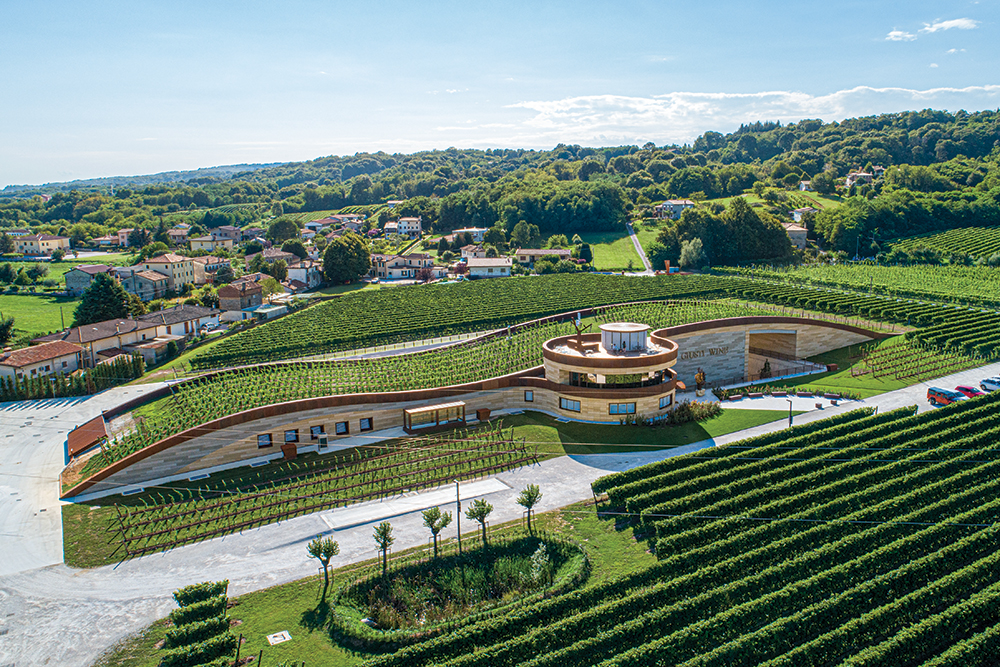
The Giusti Wine cellar in Nervesa della Battaglia designed by architect Armando Guizzo

For the waterproofing of an underground wine cellar, a total Drytech Tank was built, as the roof is also covered by the vineyard.

The new Giusti Wine cellar in Nervesa della Battaglia was designed by architect Armando Guizzo to tell a story of ties with the territory and harmony with nature.

Ermenegildo Giusti is a convinced supporter of viticulture that respects the environment and people. Giusti wanted a winery that plastically expressed the values of sustainability and integration.

The cellar is two thirds underground, while the emerged part integrates with the territory, not only architecturally but actually: the undulating roof with its rows is not an aesthetic exercise, but rather an authentic wine-growing area, structured to support the weight of the agricultural vehicles and which produces bunches exactly like the surrounding rows.

Particular attention was paid to the roofing, with an in-depth study of the materials used for growing the vines. First of all, the natural soil that covered the area before the construction site was excavated was restored on the roof.

Below this original soil, several layers of different natural materials were laid, including expanded clay, which in addition to ensuring the growth of the vines, make an important contribution to the energy saving of the building.

The entire hypogeum was created with a single waterproof Drytech Tank.

Owner: Giusti Dal Col, Nervesa della Battaglia

Project: Architect Armando Guizzo, Montebelluna

Structure: Engineer Alessandro Pagnan, Montebelluna

Drytech Tank: 4,500 m2

Abdichtung historischer Gebäude mit Steinmauern

The interior of the new headquarters of the Dand Habitat Foundation in Basel, renovated by Kräuchi Architects.

The waterproofing of historic buildings with stone walls and their integration with new waterproof concrete structures is an issue that Drytech Tank solves with effective, integrated solutions.

The Dand Habitat Foundation, which builds quality and affordable housing in Basel, purchased nine historic buildings in Kleinbasel to make them its headquarters.

Basel-based Kräuchi Architekten designed the renovation by combining the various buildings, with their different levels and floors, into a unified whole, under the supervision of the Basel Office for the Preservation of Historic Monuments.

Drytech first sealed the perimeter of the stone walls with a horizontal chemical barrier to prevent rising damp. It then built a waterproof concrete slab and sealed the joint with the stone walls with injections of DRYflex expanding resin, ensuring the total watertightness of the basement.

Owner: Stiftung Habitat, Basel

Structure: Gruner Lüem AG, Basel

Project: Kräuchi Architekten ETH SIA BSA, Basel

Construction: Morath + Crottaz AG, Basel

Waterproofing: Drytech Tank + Chemical barrier

Waterproofing of basement and swimming pool

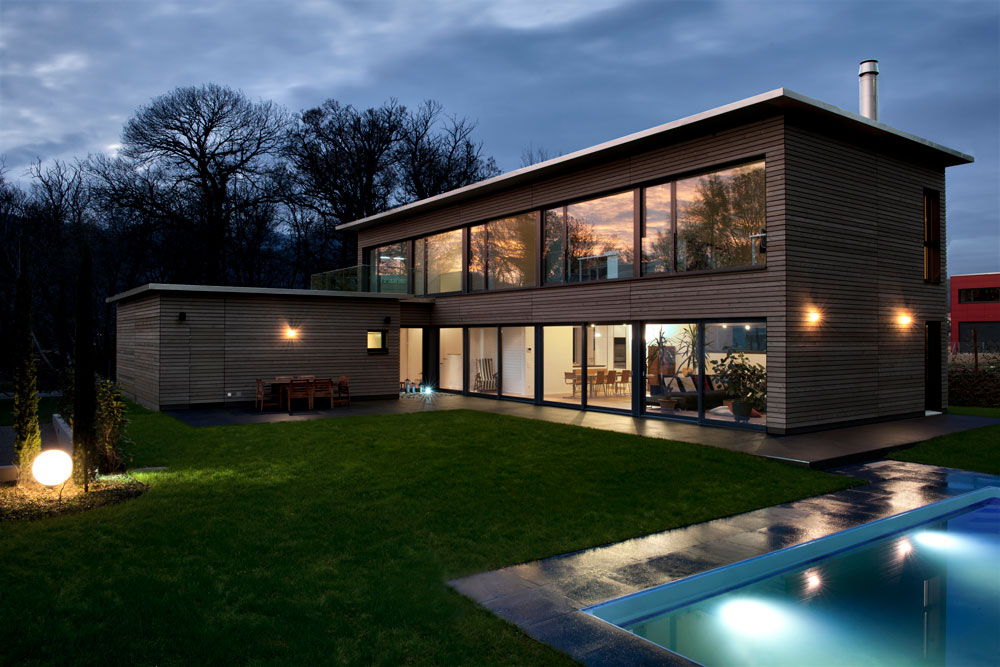
Architect Stefania Trevisani Mahler's villa consists of two volumes: one dedicated to housing and the other used as a studio for photographer Sandro Mahler. In the foreground, the swimming pool built with the Vasca Bianca Drytech waterproof structure, like the basement of the property.

The waterproofing of the basement and swimming pool of a villa designed by the architect who lives there, who has already used the Drytech Tank system for hers other projects.

Where do architects live? What is the house of someone who designs houses like? The answer of the architect Stefania Trevisani Mahler stands on a flat parcel, on which two independent volumes have been built: one dedicated to the house and the other used as a studio by the photographer Sandro Mahler.

The construction choices favored a prefabricated wooden structure with high insulating potential for all the perimeter walls of the volumes emerging from the height of the garden.

As regards the basement floors, the Drytech Tank System in waterproof concrete was instead opted for, due to the strong presence of water in the subsoil.

Project: Arch. Trevisani Mahler, Cureglia

Structure: Ingg. Giani e Prada, Lugano

Construction: Impresa Taddei SA, Viganello

Drytech Tank: 400 m²

Architectural waterproofing of the impluvium roof

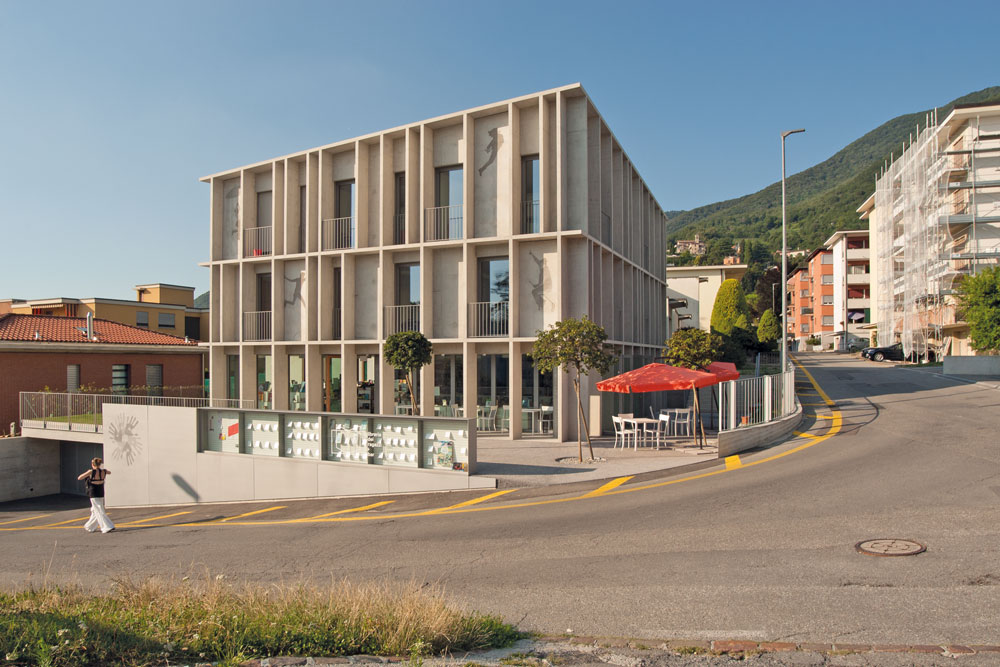
The Paolo Torriani Foundation for minors has created a new structure that allows the institution's activities to be completed, adapting them to the evolution of the needs of minors in need of reception, protection and educational support.

Architectural waterproofing of the impluvium roof and Drytech Tank for the basement of the Flying Boys’ House: the Torriani Foundation’s facility that offers young people a base to build their future.

The Paolo Torriani Foundation for minors has created a new structure that allows the institution’s activities to be completed, adapting them to the evolution of the needs of minors in need of reception, protection and educational support.

The upper floors of the structure are intended for ateliers with a therapeutic value, spaces for the involvement of families in the path of children and “bridging apartments” to support young people in the transition from the institute to autonomy and self-determination.

Learning, working, establishing relationships and growing one’s self-esteem: these are fundamental steps in the process of integration and emancipation.

For this reason, the Foundation has identified the Children’s Library, another historical Mendrisio institution, the ideal partner to create a working reality in which to start getting involved in a balanced and protected way.

The Library occupies the ground floor and also offers a literary tearoom.

In some sectors of the façade, the images of the “Flying Boys” with which the artist Roberto Mucchiut interpreted the Foundation’s goal are imprinted directly on the concrete: helping young people to grow in harmony to take flight in life.

The upper limit of the volume follows the slopes of the elegant impluvium roof, designed as a real fifth facade, giving a further element of dynamism to the Tower.

The roof was waterproofed with the elastic and continuous Drycoat covering which, overcoming the need for sheet metal work and with its reduced thickness, guaranteed the purity of the architectural lines.

Drytech has also created the underground level with the waterproof Drytech Tank structure.

Ownership: Fondazione Paolo Torriani, Mendrisio

Projekt: Krausbeck architetto with GSMM architetti, Salorino

Structure: Studio di Ingegneria Roberto Mondada, Balerna

Construction: Impresa Riva Costruzioni, Tremona

Drytech Tank: 600 m²

Drycoat roof: 250 m²