Waterproofing of the underground passage

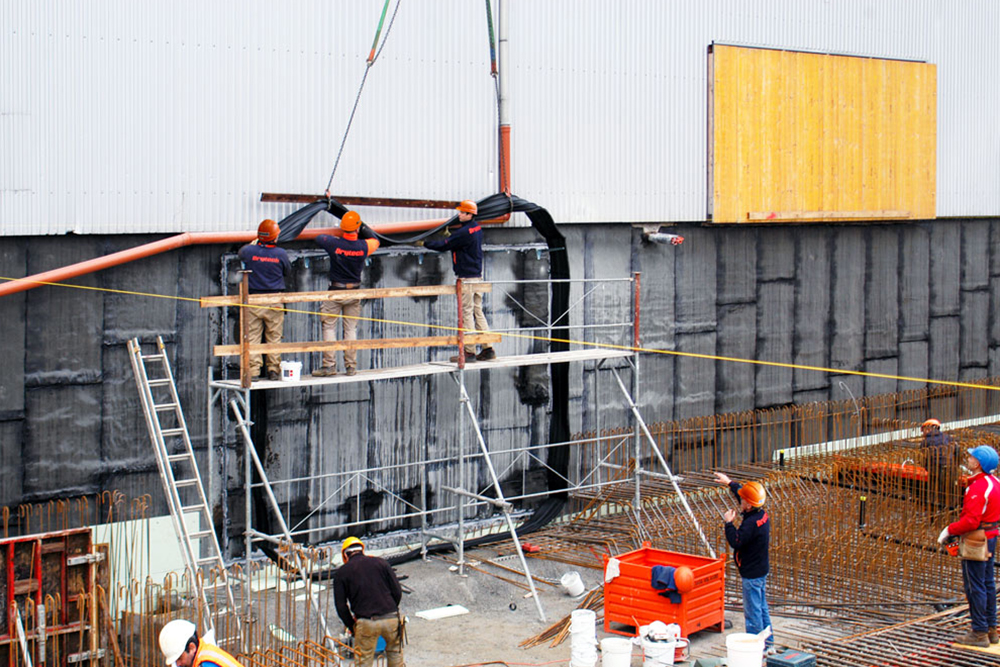
Insertion of waterstop tape in the cut made in the existing wall

The waterproofing of the underground passage connecting the new body to the main factory was realised with DRYset Injectable Waterstop Tape for movement joints.

The addition of a new body to the building of the Frigerio company in Locarno required the opening of a passage between the existing building and the new one.

The underground connection was made waterproof by inserting a continuous waterstop tape in the movement joint between the two bodies.

The DRYset injectable Waterstop Tape adds to the mechanical barrier function of traditional tapes the possibility of maintaining the joint over time, with possible re-injections of DRYflex expansive resin.

The profile of the Waterstop DRYset tape is in fact equipped with two micro-perforated ducts, through which the waterproofing resin can be injected and re-injected.

The tape was prepared in the Drytech laboratory and subjected to joint tightness tests before installation.

Access to the belt for any maintenance of the joint is guaranteed by cannulae accessible from the intrados of the building.

Owner: Poncini Holding SA, Locarno

Project: 3G Architetti SA, Tenero

Structure: Studio d’ingegneria Anastasi, Locarno

Construction: Gamboni e Salmina SA, Gordola

Waterproofing of the two underground floors

The superficial grid of the Mendrisio regional hospital brings together the different distribution of spaces

Drytech realised the waterproofing of the two underground floors of the Mendrisio regional hospital, intended for laboratories, outpatients’ departments and operating theatres, and the extension of the underground garage.

The Ospedale Beata Vergine is located in an area on the edge of the historical centre, characterised by the presence of buildings surrounded by majestic gardens.

The positioning of the hospital expansion aims first and foremost to strengthen this ensemble through the definition of a public space: an urban park capable of offering a spatial quality to the buildings that stand on this place.

The main architectural choices of the new wing, such as the porticoed ground floor and the design of the facade, derive largely from the particular condition of a hospital building surrounded by a public space.

The semi-underground rooms, the underground ones and the extension of the garage with 127 parking spaces created under the new square were created with the Drytech Tank system.

The facade seeks an adequate response to the public situation of the building, allowing an open view towards the outside but at the same time closure and appropriate discretion for those looking from outside.

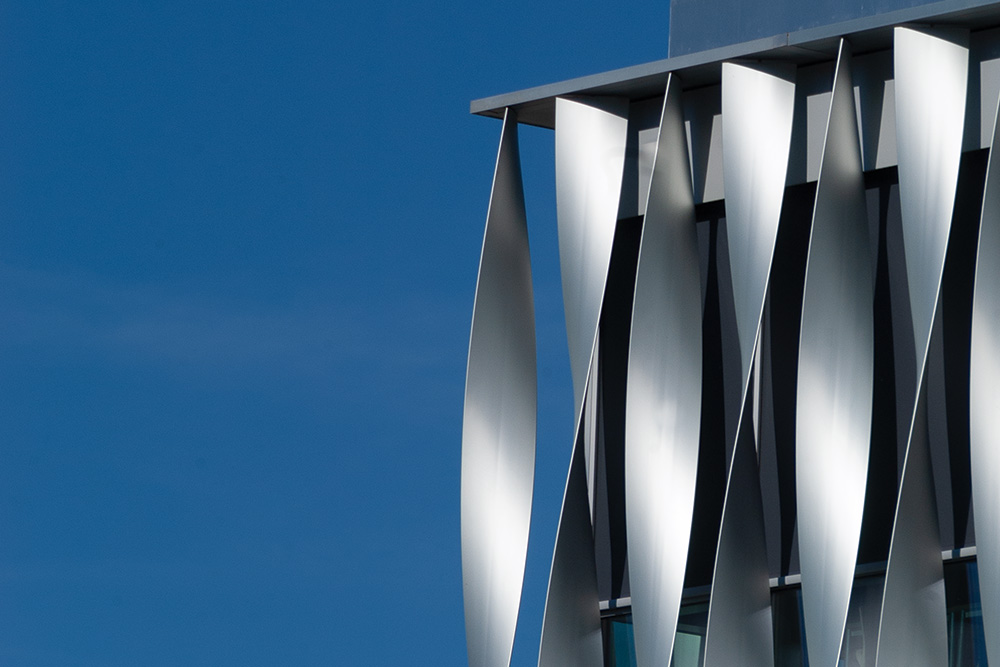
Through the twisting of standard aluminum profiles, a precise identity is given to the building. This surface grid makes the different distribution of spaces unified.

Project: Gaggini Studio D’Architettura, Lugano

Structure: Pianifica, Locarno

Works Management: Direzione Lavori, Lugano

Construction: Barella, Chiasso

Drytech Tank: 3’500 m2

Waterproofing the diaphragm wall of a five-storey underground

In Piazza Sant'Ambrogio in Milan, the company Borio Mangiarotti S.p.A. built a five-storey underground car park.

Waterproofing the diaphragm wall of a five-storey underground car park with the Drytech Tank system increased the internal volume and the number of available parking spaces.

In Piazza Sant’Ambrogio, in Milan, the construction company Borio Mangiarotti S.p.A. built a five-storey underground car park.

Drytech has designed a waterproofing system for the diaphragm, based on Injectable Waterstop Tapes.

By making the diaphragm waterproof directly, it was not necessary to create the lining wall, thus increasing both the internal volume to comply with the legal limits, and the surface, or the parking spaces available.

The Injectable Waterstop Tape for the joints between the partitions of the diaphragms is a Drytech patent that makes it possible to maintain the joint with ex-post injections of resin, performed in the event of any infiltrations.

The Drytech tape is laid with a special sheet piling which acts as a formwork of the diaphragm wall.

The diaphragm of the parking lot that flanks the Milanese basilica drops to a depth of 22.70 meters and the laying of a sheet pile of this size required special care by the company’s technicians, to ensure perfect alignment of the joints.

At the end of the casting, the sheet pile is extracted, equipped with a new belt and repositioned for the casting of the next septum.

The re-injectability of the DRYflex resin guarantees the possibility of carrying out maintenance on the diaphragm at any time, by intervening from inside the structure, without excavation or demolition and, above all, without having to close the car park.

Client: Comune di Milano

Structure: Ingegner Domenico Insigna, Milano

Construction: Borio Mangiarotti SpA, Milano

Drytech Tank:
Diaphragm: 5,600 m², h 22.70 m
Bed: 3,300 m²

waterproofing of the AET headquarter

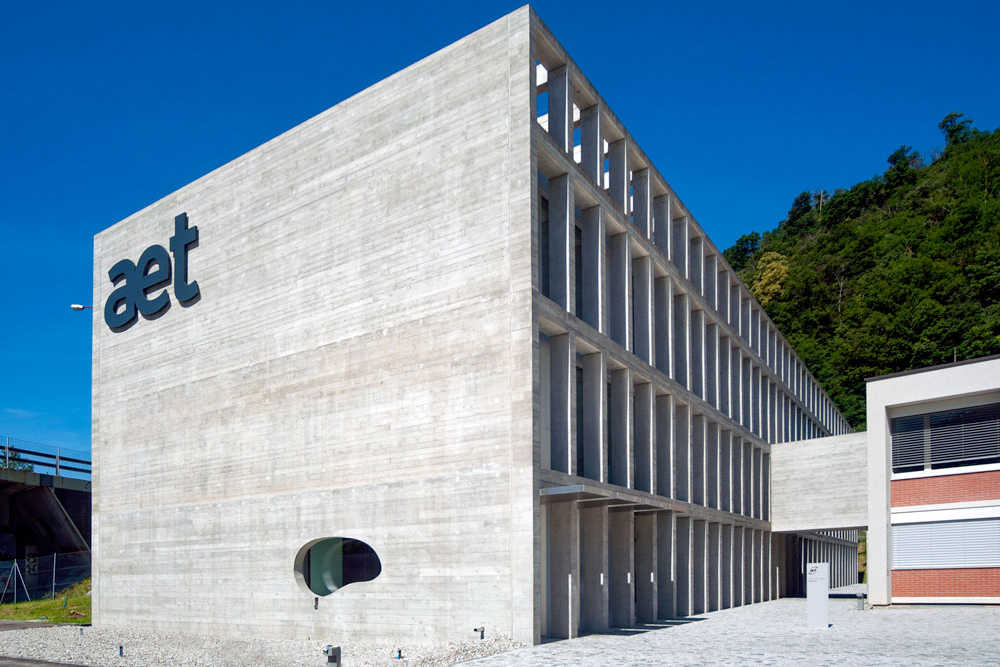
The new administrative headquarters of AET in Monte Carasso (the Ticino Energy Company) produces more energy than it consumes.
The waterproofing of the Azienda Elettrica Ticinese headquarters with the Drytech Tank system is consistent with AET’s mission.

The new administrative headquarters of AET in Monte Carasso (the Ticino Energy Company) produces more energy than it consumes.

On the one hand it boasts maximum energy efficiency in every technical component inside the building, on the other it produces energy entirely derived from renewable sources.

A positive energy balance, consistent with the corporate mission, which makes it the public building with the best energy performance in the Canton.

Designed by architects Lukas Meyer, Ira Piattini and Francesco Fallavollita, the new administrative headquarters of the Ticinese Electric Company appears impenetrable or transparent, simply matching the point of view.

The core of the building is in fact set back from the modular concrete grid facade. What a surprising optical effect from the outside translates into visual comfort on the inside: the offices are in fact flooded with mostly indirect natural light.

The site is lapped by the Ticino river and a stretch of water has been created between the existing building and the new one.

The underground structure was therefore built with the Drytech Tank system: a waterproof construction of 1,190 m², which houses the technical rooms, changing rooms, warehouses and the AET general archive.

Client:
Azienda Elettrica Ticinese

Project: AArch. Lukas Meyer e Ira Piattini, Lugano + Fallavollita, Como

Structure: Tajana & Partner Ingegneria SA, Bellinzona / Spadea e Bondini, Lugano

Construction:
Bossi e Bersani SA, Bellinzona 

Drytech Tank: 1,190 m²

Waterproofing of the private garages

Architect Diego Fumagalli designed the Gioia Garden residences starting from the classic Milanese palace.

Drytech carried out the waterproofing of the underground level for the private garages of the Gioia Garden residences in Viale Melchiorre Gioia in Milan.

Architect Diego Fumagalli designed the Gioia Garden 1 and 2 residences starting from the stylistic features of the classic Milanese palace with which they border.

He created an architectural continuity made up of citations and references, which harmonizes the relationship between the two buildings, enhancing their formal differences.

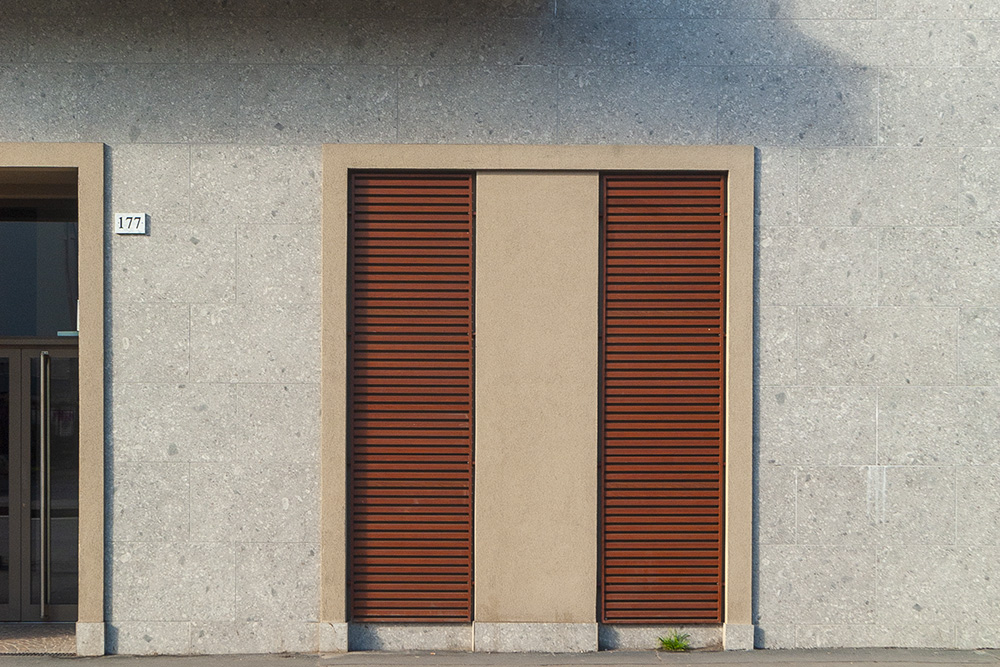
Starting from this connection, the buildings in via Melchiorre Gioia 177/179 develop their own architectural identity, fitting perfectly into the context.

At the point of contact between the two buildings, the height of the volumes was respected and, in Gioia Garden 1 and 2, the string courses of the residential levels are barely mentioned, to conceal the slight differences in the height of the floors compared to the historic building.

Once continuity with the existing one has been established, the architecture of the new building unfolds all its character: with the articulation of the facade through the volumes of the terraces and the deep recesses of the winter gardens; with the hanging gardens dotting the building at different levels; with the three additional floors, progressively set back from the main facade.

The tallest volume itself contains a further reference, taking up the horizontal shutters that characterize nineteenth-century architecture.

Due to the presence of the aquifer and the proximity to the Naviglio della Martesana, all the underground structures, including garages, were built with a 2,753 m2 Drytech Tank.

Project: Architect Diego Fumagalli, Milan

Structure: STG engineering, Milan

Construction: Domus Service CO, Milan

Drytech Tank: 2,753 m2

Waterproofing of the futuristic station

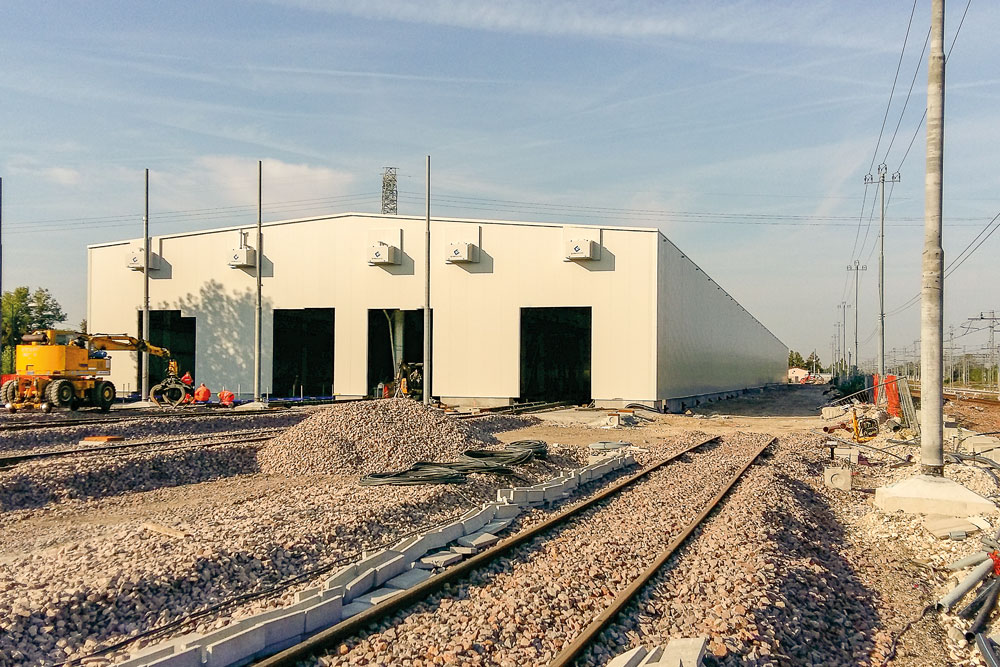
The futuristic RFI (Italian Railway Network) maintenance station in Mestre was designed to minimize the downtime of High Speed ​​Trains.

The waterproofing of the basement of the futuristic maintenance station with the Drytech Tank structure helped create a functional environment for the washing and maintenance of High Speed Trains.

The RFI (Italian Railway Network) station in Mestre was designed to minimise the downtime of High Speed Trains.

To make the washing and maintenance operations of the trains as fluid as possible, a structure has been created that allows trains to travel through the shed autonomously and for technicians to comfortably access all areas of the train, including the girth and roof.

250 meters of elevated track on columns were built for each of the 4 lanes of the workshop.

The 8,500 m² warehouse was fully fitted out with a removable rigid catenary, which allows the convoy to move without the towing of other tractors.

24 movable arms for each of the 4 internal tracks, equipped alternately with 12 motors, activate the displacement of the catenary once the train has reached the position, thus allowing to perform maintenance from above in total safety, through 7 service walkways elevated.

For girth operations, on the other hand, each raised aisle is equipped with an axle lowering system and Bertolotti opening tracks, which facilitate work on wheels and trolleys.

The equipment is completed by the mighty 10-tonne Demag overhead crane, with safety sensors.

In this regard, each track is also equipped with an individual safety system operated by sequential interlocking locks.

To connect the area to the railway network outside the shed, 5 km of tracks were laid, which create the access routes both to the internal tracks of the shed and to the two external tracks of the area used for washing the trains.

The internal installation was completed in record time in just 105 days!

The peculiarities of the Drytech Tank System contributed to this result.

The fact that the installation and injection activities of the Drytech System are parallel and independent from other construction site activities, and from the weather, has actually made it possible to eliminate waterproofing from the time schedule, accelerating the construction site as a whole.

Furthermore, the control of the shrinkage crack guaranteed by the Drytech Tank has considerably speeded up the casting operations.

Ownership: RFI – Italian Railway Network, Roma

Works Management: RFI – Ing. Francesca Perrone, Padova

Structure: Sogen, Padova

Construction:
Quadrio Gaetano Costruzioni, Talamona / Notari Costruzioni Speciali, Aqui Terme

Drytech Tank: 7,600 m²

Waterproofing a museum and its car park

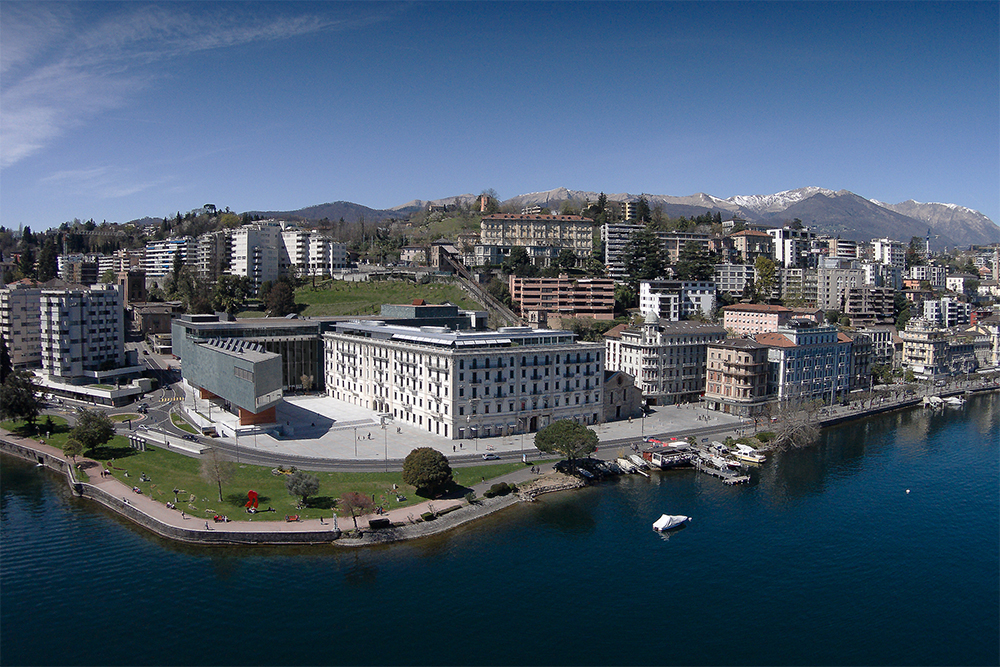
Designed by the Ticino architect Ivano Gianola, the Lac is the new, iconic cultural center of Lugano, which hosts a large theatre, an art museum, exhibition halls, spaces for events and which creates a square in continuity with the city's urban planning , which  offers convenient underground parking on the lakefront.

Waterproofing a museum and its car park is a job of great responsibility, made even more delicate by the structure’s proximity to the lake.

Designed by the Ticino architect Ivano Gianola, the Lac is the new, iconic cultural center of Lugano, which hosts a large theatre, an art museum, exhibition halls, spaces for events and which creates a square in continuity with the city’s urban planning , which  offers convenient underground parking on the lakefront.

The complex integrates the façade of the historic Hotel Palace and develops around a large square which can in turn host shows and exhibitions.

The city also has 10,000 m² of pedestrian areas and a park behind the building.

Drytech designed and built the waterproofing of the underground structures of both bodies, for a total of 19,800 m² of Drytech Tank, built below the level of the lake.

Client: Città di Lugano

Project: Architect Ivano Gianola, Mendrisio

Structure: Eng. Sciarini, Vira Gambarogno

Construction: Cosma Swiss SA, Lugano

Photo: Studio Pagi, Lugano

Drytech Tank: 19’800 m²

Waterproofing of kitchens and gymnasium

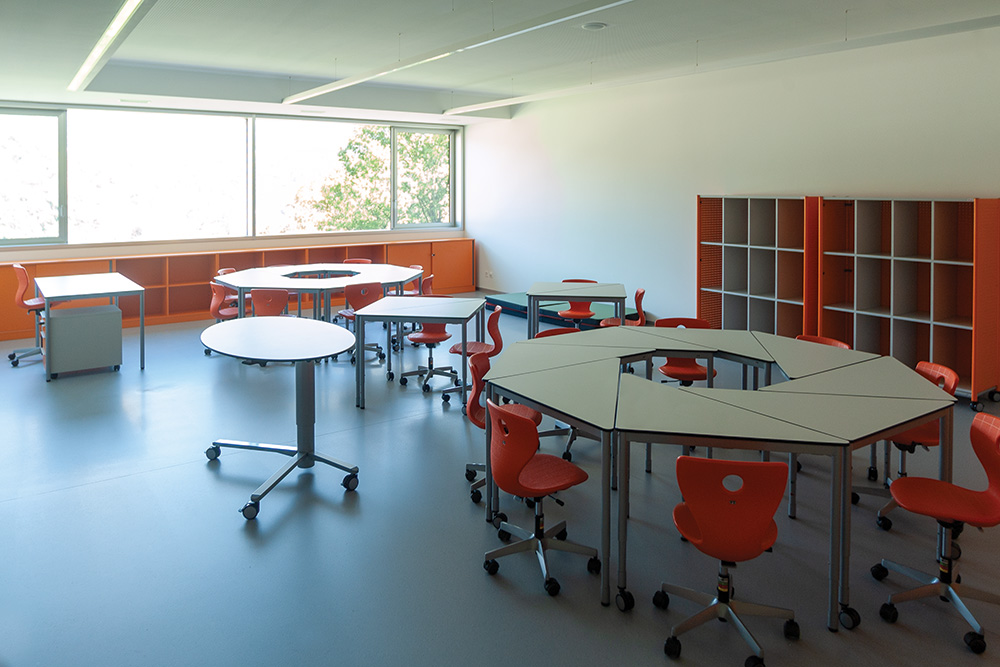
A classroom of the Bedano Elementary School designed by the architect Vezzoli

Drytech carried out the waterproofing of the technical and service rooms, the kitchens and the basement gymnasium of the Primary School in Bedano.

There is an additional emotional involvement in designing and building a school. There is a sense of future that invests us with further responsibility.

There is the evocative power of memories: the first day of school and then all the other first times at school that determined what we would become.

Architect Vezzoli designed a structure composed of two perpendicular bodies: one dedicated to classrooms and service spaces and the other to the gym, with a gallery for the public.

The corner between the two bodies forms a space characterized by a large lawn, delimited on the third side by the steps of a grandstand that emerges from the greenery, creating a continuum with the surrounding nature.
It is the contemporary and organic version of the school courtyard, perfectly inserted into the context of the hill on the slopes of which the school complex stands.

Set in the profile of the slope, the building is partly underground and was built with the Drytech Tank.
On the ground floor of the main building there is space for the management, administrative offices, the canteen for around 60 students, the after-school club and the large entrance hall with access to the gym.

On the two upper floors there are the classrooms, set up to encourage maximum flexibility in the organization of the class, depending on the different activities.

Project: Architect Egidio Vezzoli, Bedano

Structure: K.ing Civil Engineering, Agno

Construction: Giovanni Quadri, Cadempino

Drytech Tank: 2,500 m2

Waterproofing of a completely underground house

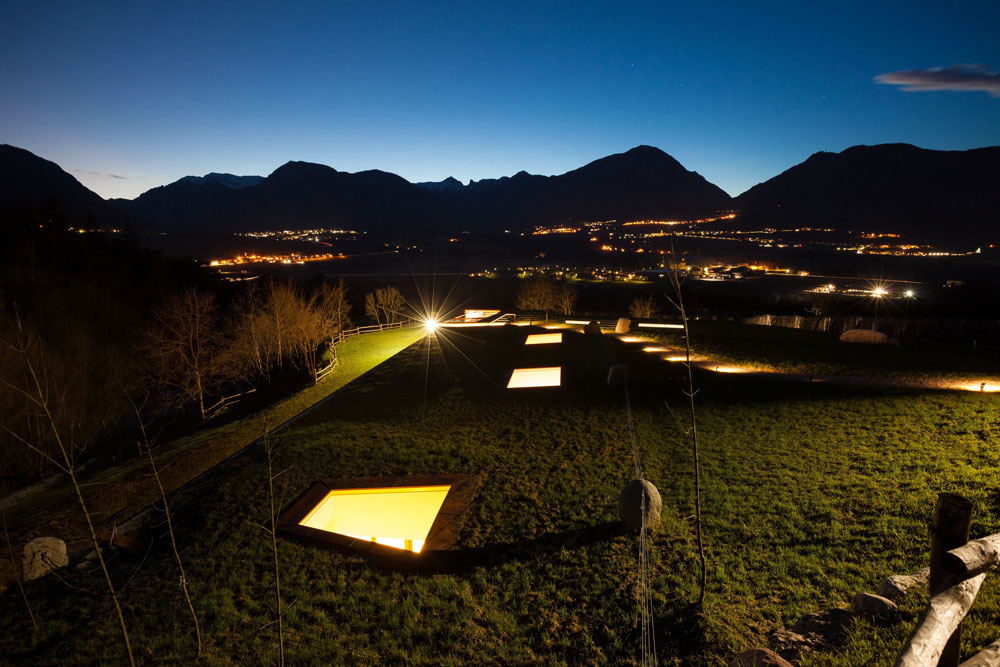
The roof of Casa Riga is the lawn in which it is set, thanks to the Drytech White Tank waterproofing, consisting of Drytech waterproof concrete bed, walls and slab.

The waterproofing of a completely underground house was realised with a complete Drytech Tank: waterproof bedplate, walls and slab.

Riga House is a truly special farmhouse overlooking Comano Terme.

The idea was to create a house for a family of farmers and an farmhouse for their guests within a farm, without interrupting the precious continuity of an Alpine landscape made up of orchards and sloping meadows.

An ambitious request, to which Studio Stefania Saracino and Franco Tagliabue Architetti gave a radical response, setting the Casa Riga directly in the mountain just outside Comano Terme, in Trentino.

The structures in contact with the ground, bed and walls in contact with the ground, were built with the Drytech Tank System.

Project: Saracino Tagliabue Architects, Bolzano / Como

Structure: Ing. Giovanni Periotto, Trento

Construction: Damiani-Holz&Ko, Bressanone

Energy: Energytech, Bolzano

Photo: Davide Cornacchini, Venice

Drytech Tank: 725 m²

Gärtnerei, Bärau

The greenhouses of the Bärau garden centre.

Schon vor über zweihundert Jahren entstand in Bärau bei Langnau das erste Gebäude.

Heute ist das kleine Dorf die grösste Institution des Kantons Bern im Bereich «Wohnen und Leben mit Beeinträchtigung»: Es leben dort betagte und pflegebedürftige Menschen in Eintracht mit Erwachsenen, welche an psychischer, sozialer oder geistiger Behinderung leiden.

Weshalb sich auf dem Areal zahlreiche Betriebe der Sparten Gastronomie, Handwerk, Gärtnerei, Land- und Hauswirtschaft befinden.

Letztlich dienen sterben hier erwirtschafteten Rohprodukte teilweise der Selbstversorgung des «Resorts Lebensart».

Mithin entstand ein reiner Zweckbau, wenngleich man bewusst auf Blech bei der Auskleidung der Halle, from der Gebäudekomplex eine Wertigkeit verzichtet erhalten sollte: Mittels Holzbauweise gleichzeitig Gesamtstabilität und Erdbebenserticherutheit sow.

Die Fassade musste ästhetisch in ökologisch unbehandeltem Struktur-Holz – hier Weisstanne aus dem Emmental – etwas hergeben!

Im Erd- und Untergeschoss befinden sich vor allem Produktionsflächen plus Lager, im Untergeschoss zusätzliche Parkplätze.

Bauherr: Stiftung Lebensart, Bärau

Projekt: Planungsbüro Grossenbacher GmbH, Schwanden im Emmental

Struktur:
C+S Ingenieure AG, Hasle bei Burgdorf

Abdichtung: Drytech Schweiz

Drytech Wanne: 2’724 m2